


The graphic adaptation of Niki Stavridi’s story “Where Is the Violin?” has been included in the exhibition GÖRÜNmeyEN İZLER? with the author’s permission. The graphic story was developed around the questions: “Must empowerment always be a narrative of victory or transformation?” , “Isn’t also the need for empowerment, the potential for empowerment, and standing at its threshold worth celebrating?”
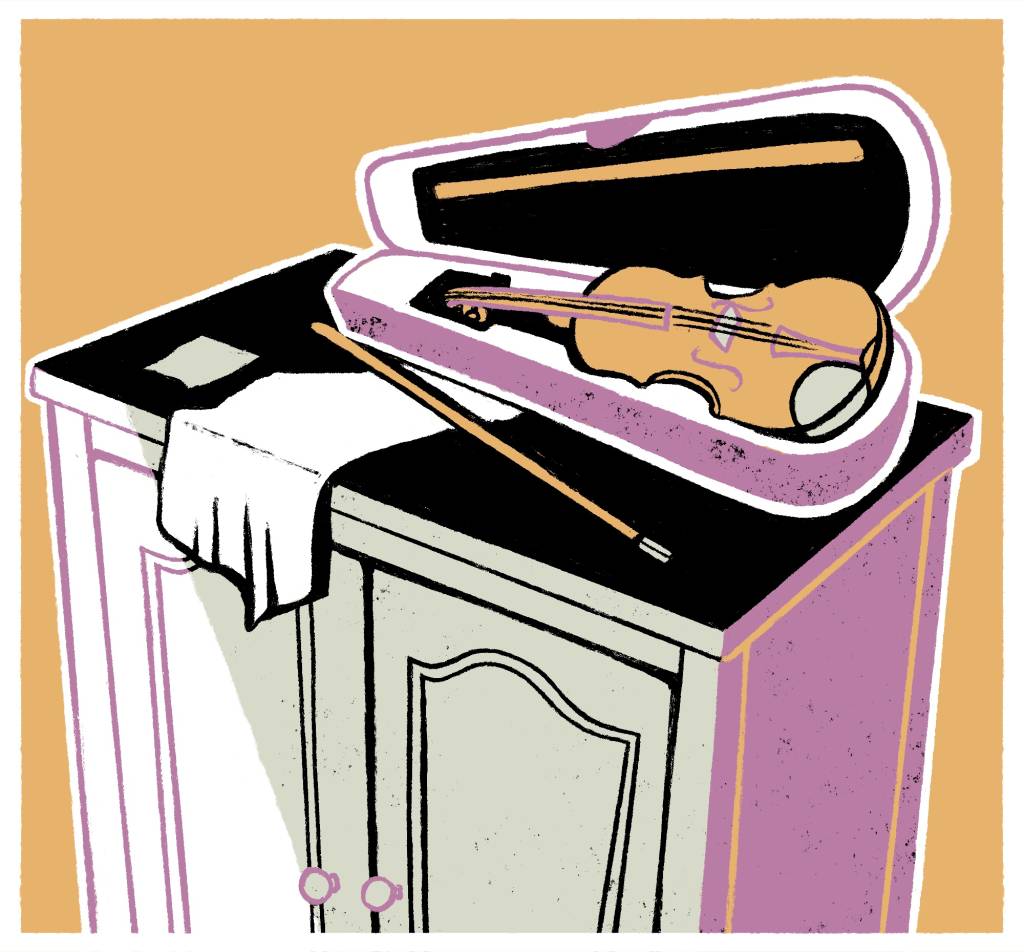
The violin is on top of the wardrobe, at the far end. It rarely comes down from there… Only as a special favour or for an unusual performance. We gaze in admiration at the case, the two bows, especially the instrument itself, the cotton cover that wraps it, and the silk handkerchief that once covered the top of the little plate where the chin used to rest.
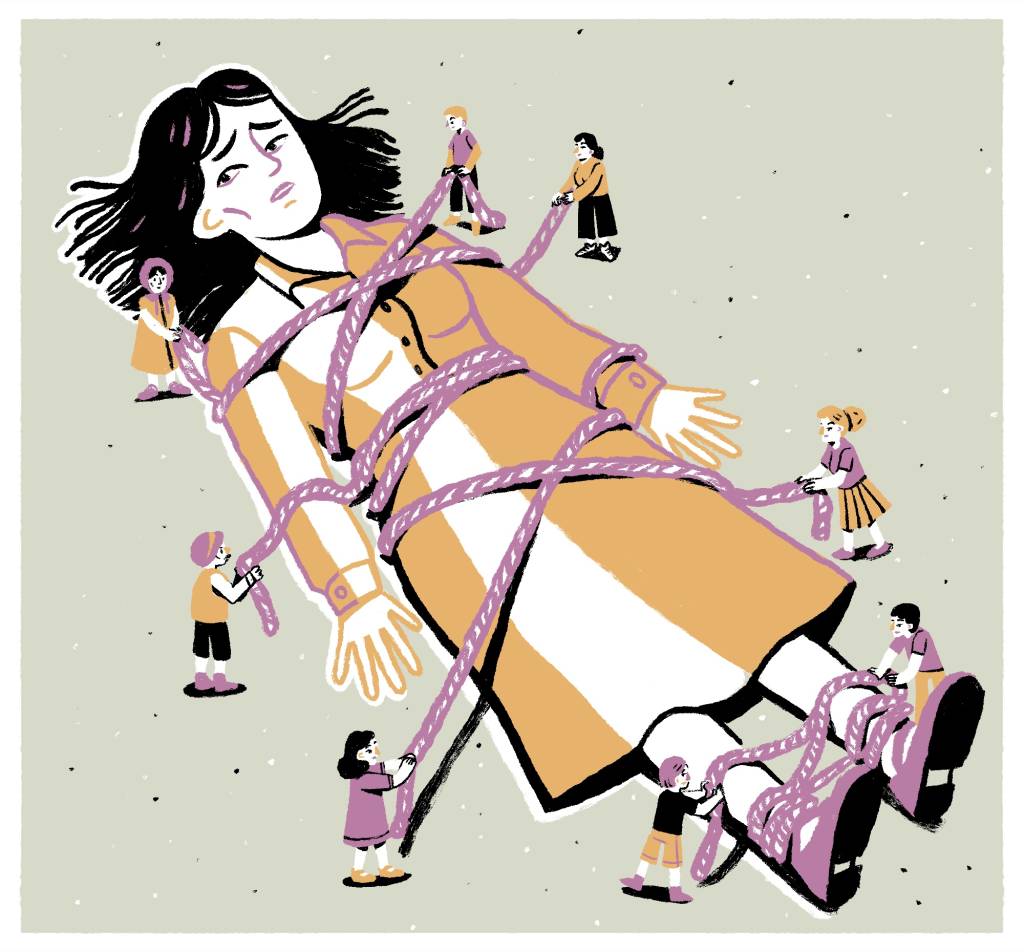
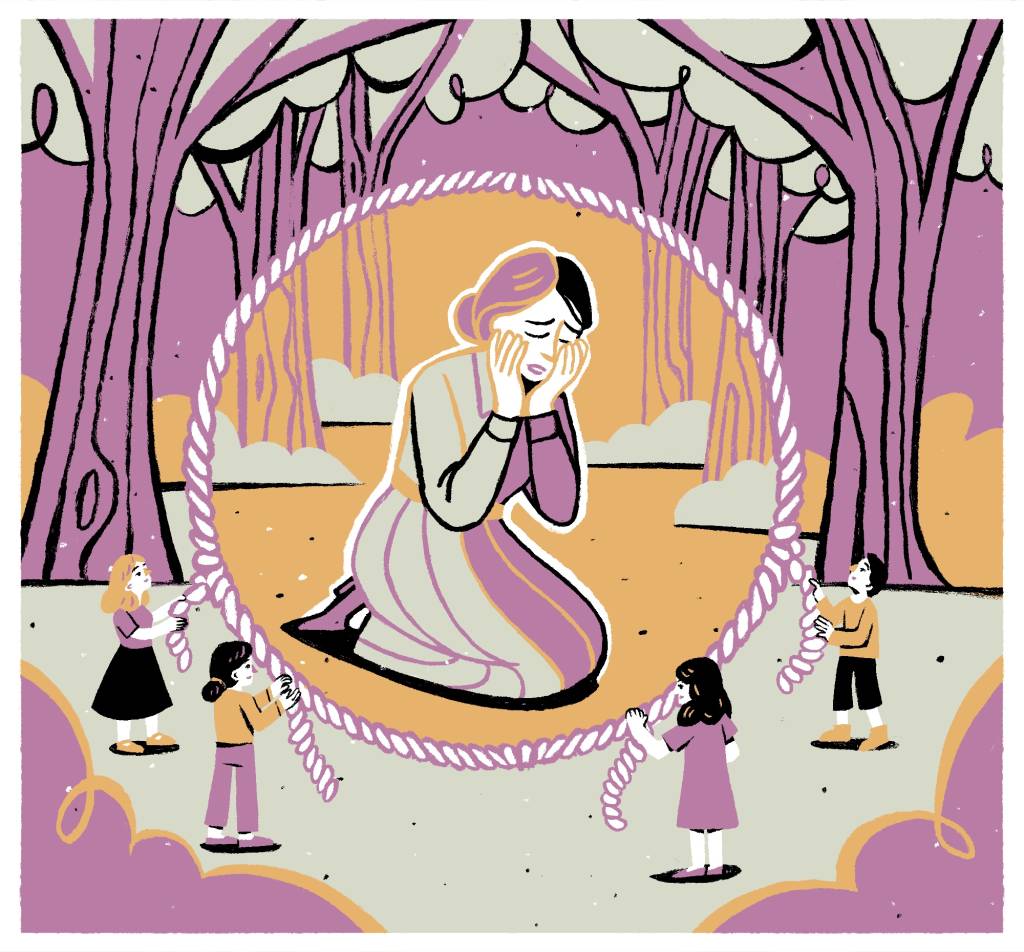
The violin belongs to the mother’s previous life. Her children, the apples of her eye, belong to her next life. They are the Lilliputians who keep Gulliver tied to the ground.
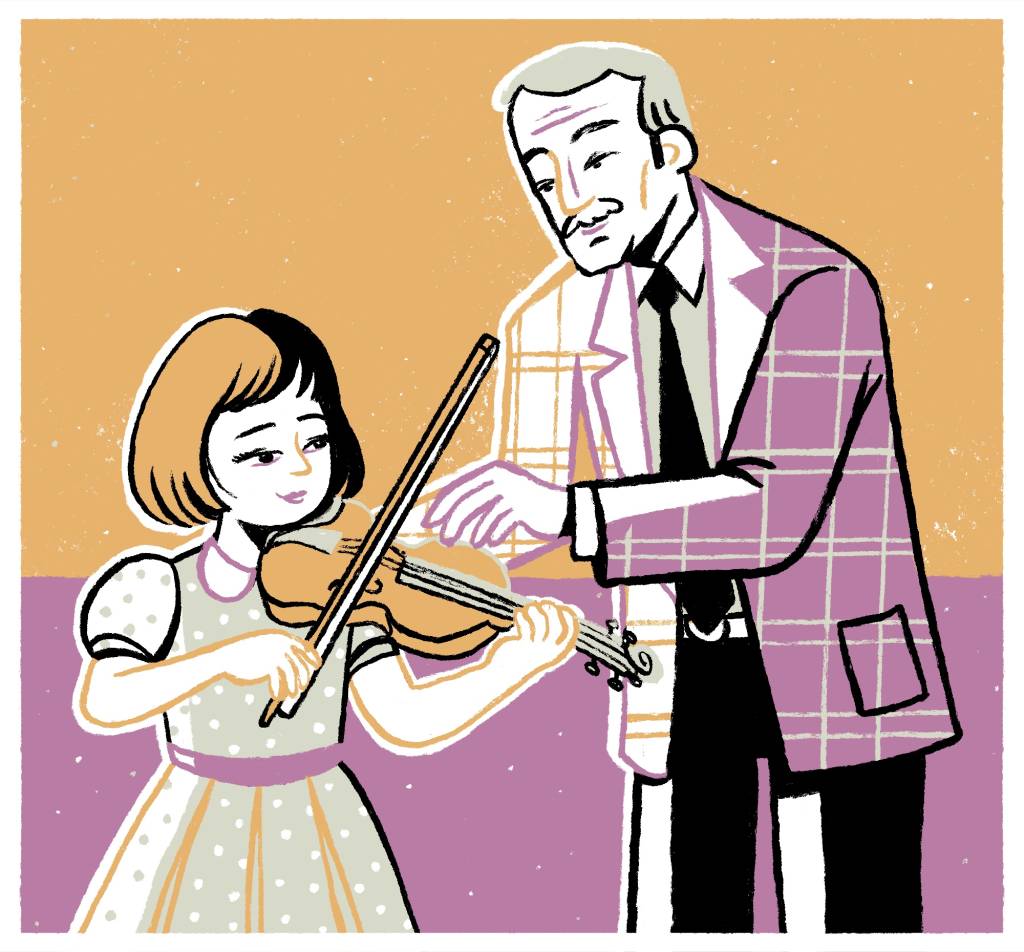
Gulliver was small at first, a mini violin, when she was five years old. Mr. Xanthopoulos was giving her music lessons.
From there, she would go on to reach Dimitri Mitropulos, the chairman of the examination committee, who would greet her with a warm handshake, when she was – by unanimous vote – awarded the best mark at the end of the concert she played for her diploma at the Athens Conservatory. And she remembered how Mitropulos – impressed by her interpretation of the Heinrich Wieniawski concerto she played for the conservatory’s master’s exam – rushed up the steps to the stage in the excitement of the moment.
This Gulliver would never escape the bonds of the Lilliputians again. She would lie lifeless on a plateau at the mountain’s summit. The princess who would awaken Gulliver with her kiss and touch was under the influence of an evil spell.
Inside the house, she would wander around the forest and weep.
Leonid Kogan, David Oïstrakh, Jascha Heifetz, Suna Kan, and Ruggiero Ricci were the sirens calling to her with their music from Istanbul Radio’s Third Programme. She would constantly listen these songs and weep.
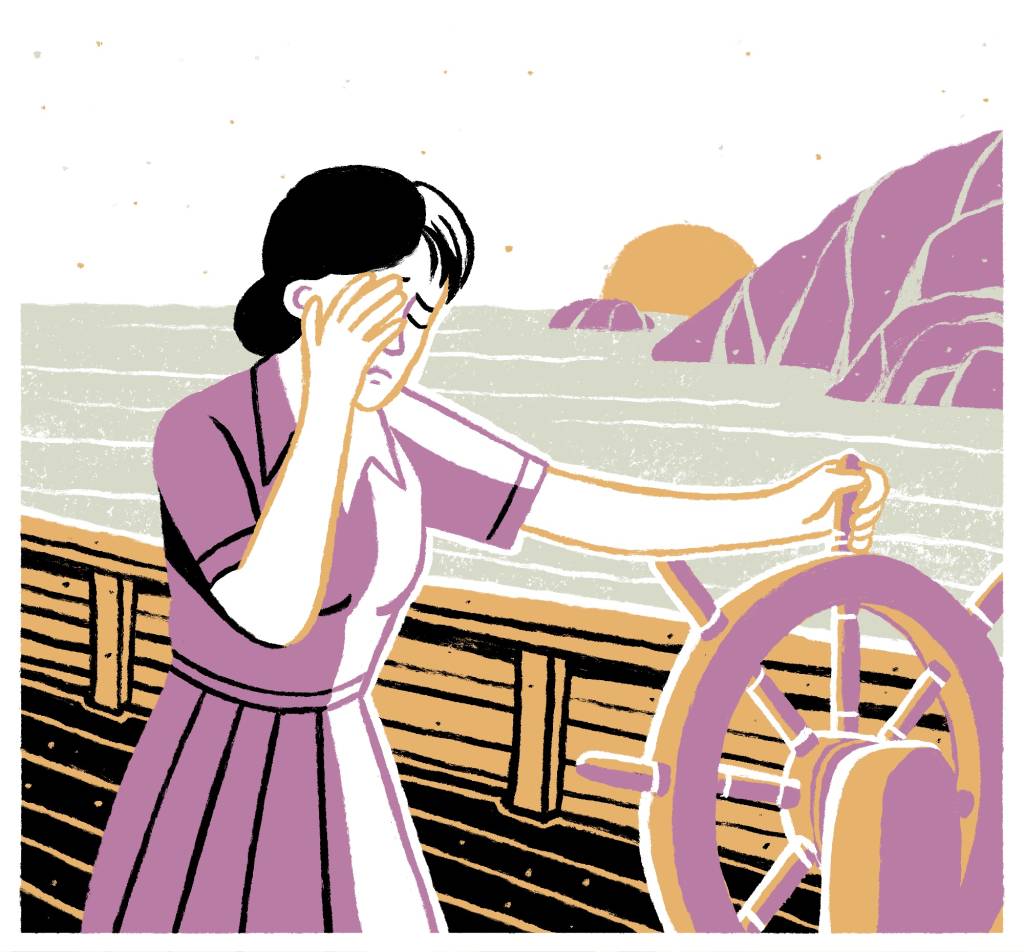
She had boarded a boat—she was the captain—but no one knew it. Apparently, she didn’t know it either.
If she had openly assumed the role of captain, she could have communicated with the sirens: she could have approached them, docked with them, played with them, and boarded her boat again whenever she wanted.
But she only listened to the sirens from afar… and cried, cried, cried.
This Gulliver remained just as she was until today – lifeless, beautiful, and cold.
The woman captain went elsewhere. It’s not impossible that she’s now at the helm, but no one knows.
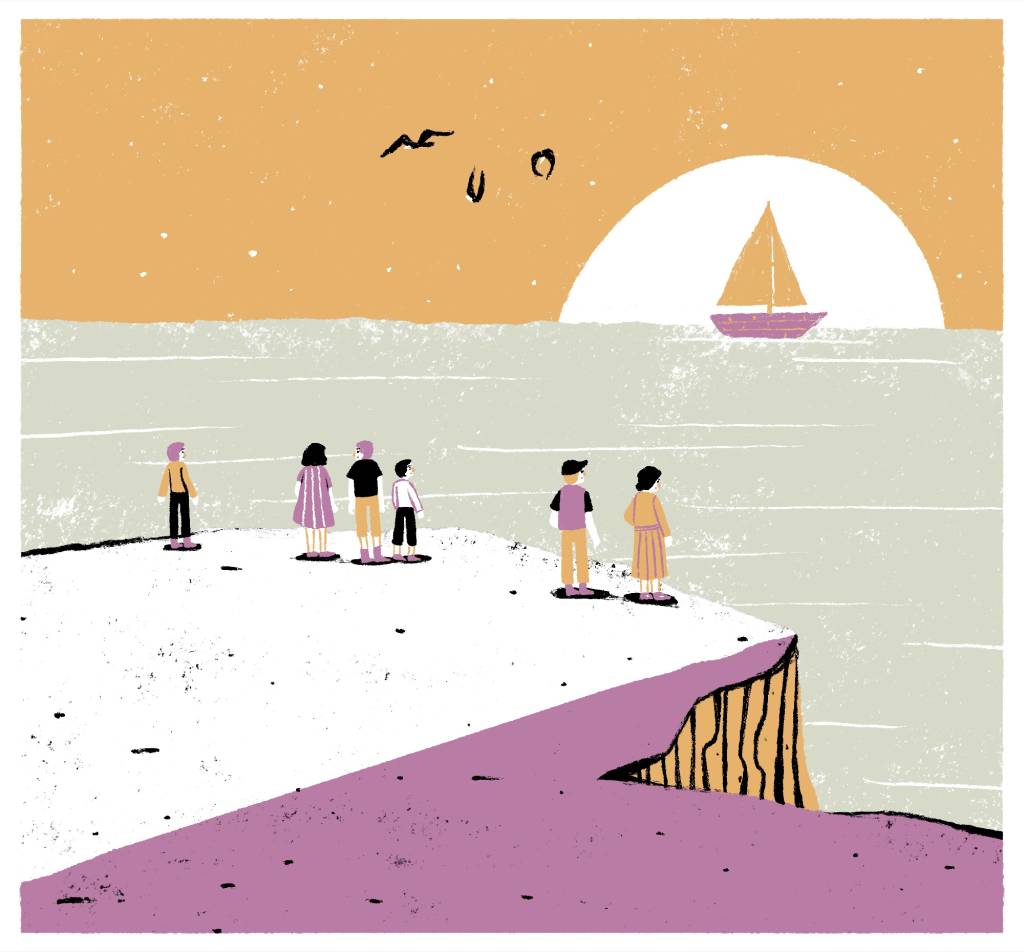
The Lilliputians have migrated inland. However, they very rarely climb up to a high plateau to gaze at the sea and the seabed from afar—at the sunken ships and treasures sleeping there. Far away, way over there.
Illustrator: Eda Çağıl Çağlarırmak
The short story “Where Is the Violin?” was translated using DeepL.com, based on the French translation from Greek by Françoise Miquet. The English translation was reviewed and corrected by the author, Niki Stavridi.
(“Où est passé le violon ?”, Niki Stavridi, Petites histoires sans fioritures (Mikres astolistes istories), Hestia, 2018)
Niki Stavridi (b. 1954) left Istanbul, where she was born and raised, in 1979. She lives in Greece. She studied English Literature and Social Anthropology and works as a translator from Turkish and English into Greek. Her translations from English into Greek include Radclyffe Hall’s “The Well of Loneliness” and from Turkish into Greek, Oğuz Atay’s The Disconnected (Tutunamayanlar) and “Waiting for Fear” (Korkuyu Beklerken), Tezer Özlü’s “Journey to the Edge of Life” (Yaşamın Ucuna Yolculuk) and “Old Garden – Old Love” (Eski Bahçe-Eski Sevgi). In addition to Greek, Turkish, and English, he speaks French and Italian.